


What I Study
My research focuses on the spatial dimensions of the informal and illicit economy, primarily within cities and urban environments. I am particularly drawn to project topics for which data is messy or public understanding is relatively low. Beyond that, I mostly just study things I find curious, interesting, or necessary.
Research Themes
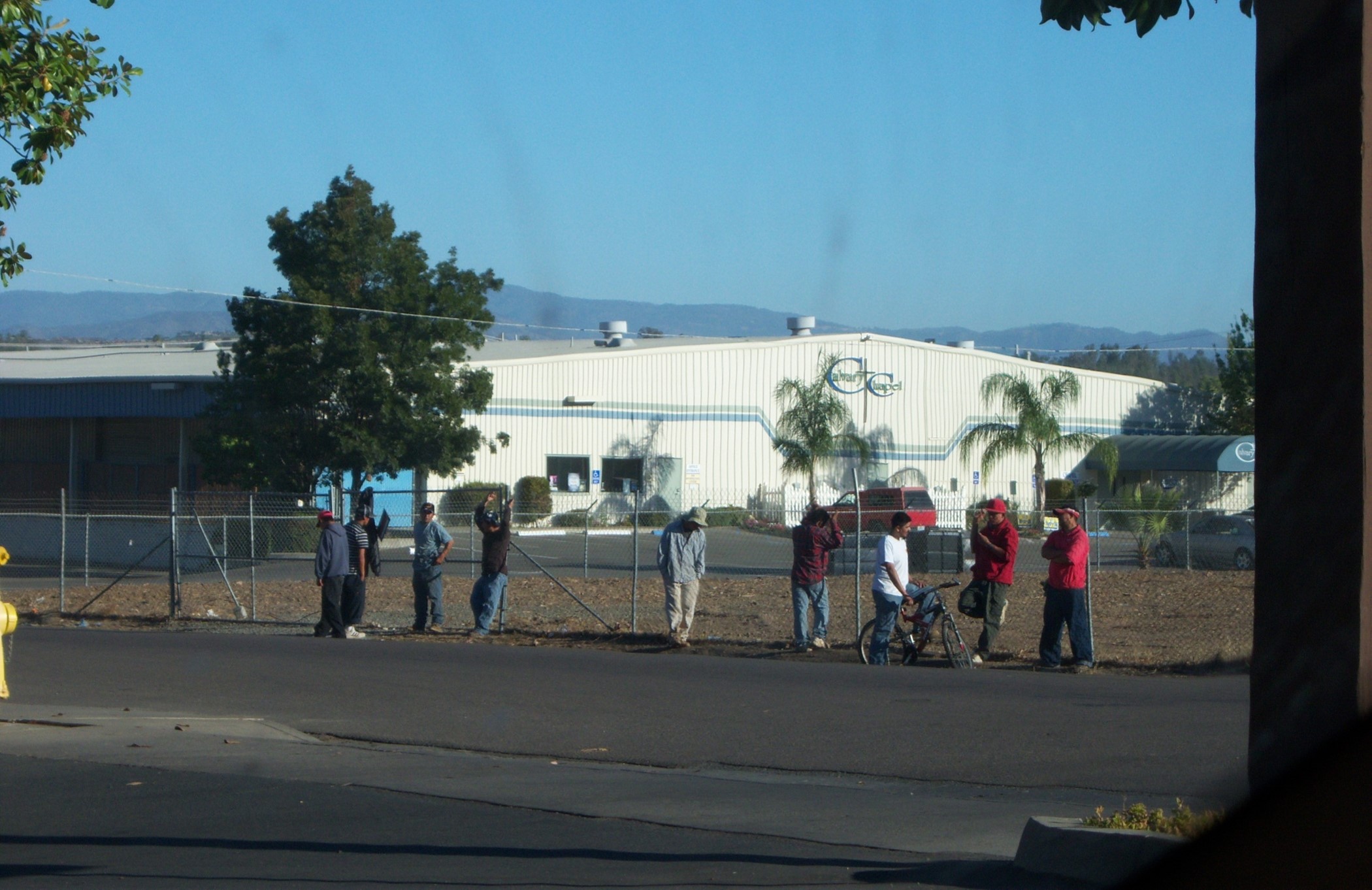
Informal Day Labor
Examining where day laborers congregate, how they maintain access to hiring sites, and evaluating municipal policies that attempt to regulate this informal labor market.

Illicit Massage Businesses
Understanding the locational strategies of illicit massage businesses and whether geographic analysis can help identify potential trafficking situations.

Historic Grain Infrastructure
Documenting and analyzing abandoned grain silos and elevators as artifacts of agricultural and economic history.
Peer-Reviewed Publications
Crotty, S. M. & Zhou, X. (2024). Shame buffers and spatial risk-mitigation: Exploring the effects of social stigma on the locational strategies of illicit massage businesses and their customers. Applied Geography, 171, 103391.
Download Article →Crotty, S. M. & Daku, M. (2023). An Exploratory Geospatial Typology of Illicit Massage Businesses in the Dallas-Fort Worth Metropolitan Area. Papers in Applied Geography, 1-22.
Download Article →Crotty, S. M. (2020). Origins of Informality: Examining the historical and spatial roots of informal day-labor hiring sites. In Temporary Appropriation of the City: A Contribution to Urban Sustainability. Eds. Lara-Hernandez, A., Melis, A., & Thompson, J. (pp. 127-146). Springer.
Download Article →Crotty, S. M. & Bouché, V. (2018). The Red-Light Network: Exploring the Locational Strategies of Illicit Massage Businesses in Houston, Texas. Papers in Applied Geography, 4, 205-227.
Download Article →Bouché, V. & Crotty, S. M. (2017). Estimating demand for illicit massage businesses in Houston, Texas. Journal of Human Trafficking, 1-19.
Download Article →Crotty, S. M. (2018). Strategic Visibility and the Production of Day-Labor Spaces: A Case Study from the San Diego Metropolitan Area. Urban Affairs Review, 54, 593-631.
Download Article →Crotty, S. M. (2016). Can the Informal Economy be "Managed"?: Comparing approaches and effectiveness of Day-Labor Management Policies in the San Diego Metropolitan Area. Growth and Change: A Journal of Urban and Regional Policy. DOI: 10.1111/grow.12180.
Download Article →Crotty, S. M. (2015). Locating day-labor employment: Toward a geographic understanding of day-labor hiring site locations in the San Diego metropolitan area. Urban Geography, 36(7), 933-1017. DOI: 10.1080/02723638.2015.1049481.
Download Article →Walker, K. E. & Crotty, S. M. (2015). Classifying high-prevalence neighborhoods for cardiovascular disease in Texas. Applied Geography, 57, 22-31. DOI: 10.1016/j.apgeog.2014.11.011.
Download Article →Crotty, S. M. (2014). The Social Geography of Day Labor: Informal Responses to the Economic Downturn. Yearbook of the Association of Pacific Coast Geographers, 76, 22-48.
Download Article →Crotty, S. M. (2014). Degraded Work: The Struggle at the Bottom of the Labor Market. By Marc Doussard. Minneapolis: University of Minnesota Press, 2013. [Book Review]. Economic Geography, 90(3), 347-348.
Download Article →Crotty, S. M. (2010). Race/Racism. In The Encyclopedia of Geography. Eds. Warf, B. & Jankowski, P. Thousand Oaks: Sage Publications.
Download Article →Crotty, S. M. & Bosco, F. J. (2008). Racial geographies and the challenges of day labor formalization: A case study from San Diego County. Journal of Cultural Geography, 25(3), 223-244.
Download Article →Crotty, S. M., Aitken, S., & Moreno, C. (2008). "Each and every story about me… there's like a huge twist to it": Growing up at risk in the United States. In Telling Young Lives: Portraits of Global Youth. Eds. Jeffery, C. & Dyson, J. Philadelphia: Temple University Press.